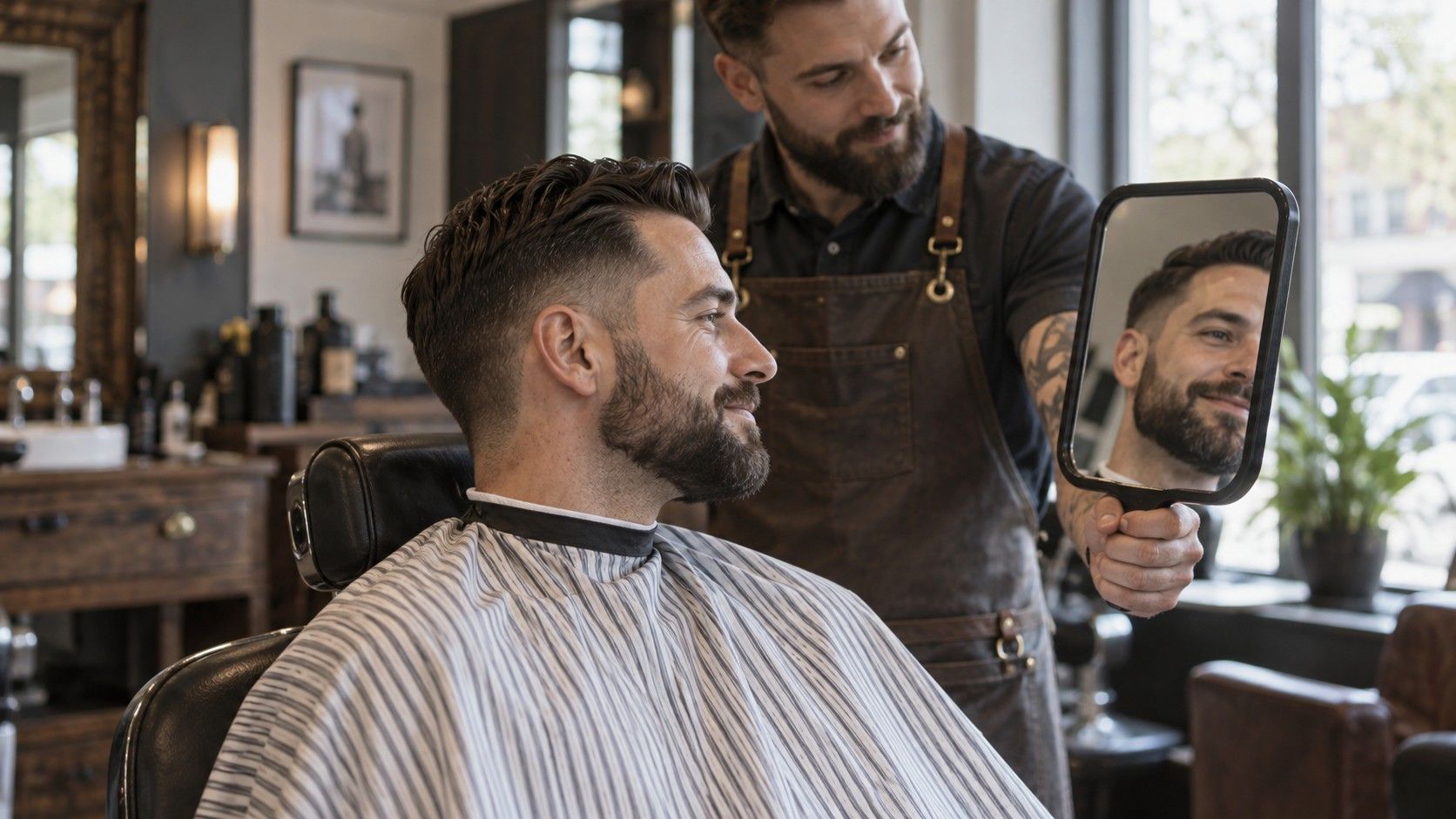
A beard changes the outline around your cheeks, jaw and chin, so small differences in length can matter more than a label on a face shape chart. Start with the hair you actually grow and the effect you want. Then adjust a few areas carefully, checking the beard from more than one angle before committing to a new outline.
Start with growth pattern and the effect you want
A face shape label can give you a starting point, but the hair you grow sets the workable options. Check the density at the cheeks, the connection between moustache and chin, and the direction of growth near the jaw. A full beard in a reference photograph may depend on coverage you do not have. A shorter style that follows your own growth can look more deliberate than extra length kept only to imitate that reference.
Decide what you want the outline to do. You may want a longer lower face, less fullness at the sides, a more visible jaw, or simply a tidy beard that takes little time in the morning. None of these goals is a requirement for a round, square or long face. If you like the width or angles you already have, there is no reason to disguise them.
Inspect the beard dry, in ordinary light, with your head level. Wet hair lies flatter and can make it hard to judge bulk. Comb in the direction you normally wear it before deciding where to shorten it. Take a front photograph and a side view at a comfortable distance so you can check the silhouette without repeatedly leaning into a small mirror.
Adjust length at the chin and the sides
For a round-looking face, a little more length toward the chin with neater sides is one possible experiment when you want a longer outline. Keep the change modest at first. A sharply pointed chin beard can create an effect you do not enjoy, and short sides may reveal sparse areas. Compare the shape from the front before deciding that more length is automatically better.
For a longer or rectangular face, heavy length below the chin can extend the outline further. If your aim is to limit that effect, try a shorter chin with some controlled fullness along the sides. This does not mean that every person with a long face needs a broad beard. A close, even beard may suit your preferences better, especially if the sides are uneven or you dislike the feeling of bulk.
A square jaw can be emphasized with a crisp, fairly straight outline or treated more softly with rounded transitions. The choice is aesthetic. Avoid assuming that a prominent jaw must be made less visible. For an oval or mixed face, use the same decision process: choose where you want volume to sit, then check whether the beard can grow evenly enough to support it.
Change one area at a time. If you shorten the sides, reshape the chin and raise the cheek line in the same session, you may not know which change helped. Begin with a conservative trim, look again after brushing out the loose hairs, and leave enough length for a second adjustment. Guard numbers vary with the tool and are not a reliable universal recipe.
Set cheek and neckline boundaries conservatively
The cheek line frames the upper beard. Follow the main area of growth when you are uncertain, removing only isolated hairs above it. A lower, very sharp line can change the apparent density and the shape of the beard, but it also removes room for correction. Check both sides from the front rather than trying to make one cheek perfect in a magnifying mirror and then copying it.
The neckline needs to work when your head is in its usual position. Tucking the chin down stretches and folds the skin differently from looking straight ahead. Mark the intended boundary while upright, then inspect it from the side. Avoid shaving high into the visible jaw area simply because the underside of the beard looks untidy when you tilt your head back.
There is no single finger-width rule that places every neckline correctly. Neck length, jaw position, beard length and the style all change what makes sense. A short beard often needs a clear boundary; a longer beard can cover more of the neck and depend on a different outline. Ask a barber to set the first line if you cannot see it comfortably or are unsure where the shape should sit.
Use clean tools according to their instructions and work slowly around the boundary. If a trim leaves one side lower, do not keep raising both sides until little beard remains. A slight difference may be less noticeable than an aggressive correction. Let the area grow back before making the next major adjustment.
Use side and front views to check the result
The front view shows width and symmetry, but it can hide a beard that projects much farther forward than you expected. A side view reveals the transition from sideburn to cheek, the bulk under the jaw and the profile of the chin. Use both views before deciding that a style looks balanced. A three-quarter photograph can help you see how the two outlines connect.
Check the beard with your usual haircut and glasses. Very short hair at the sides can make a full beard feel more prominent, while a high hairstyle adds height above the face. These elements combine visually. If you want less overall length, changing only the beard may not address the effect created by a tall quiff. Bring a photograph of your ordinary hairstyle to a barber appointment.
Look again after moving your head and speaking. A beard that is combed into an exact shape for one photograph may separate or curl differently during the day. If maintaining the outline requires constant rearranging, try a slightly shorter version or a shape that follows the natural growth. The best reference is how you actually wear it, not a perfectly staged minute after styling.
Keep comparison photographs consistent in distance and lighting. A close phone camera can change facial proportions, and a strong shadow may make one side look denser. Photograph the same views after a later trim if you want to track changes. Do not interpret small differences between unrelated selfies as evidence that your face needs a new beard style.
Give your barber a plan you can maintain
Instead of asking only for a beard for a square face, describe the change: keep the jaw visible, remove bulk behind the corners, or leave some length at the chin without forming a point. Bring one or two references with a similar growth pattern. Say which parts you like. A photograph can show the side transition you want even when the total beard length is different.
Explain how often you are willing to trim and whether you use clippers at home. A sharply edged short style may need more frequent attention than you want to give it. A longer shape may need regular combing and selective trimming even if the boundary is less obvious. Ask the barber to show you the areas to maintain and the areas to leave alone between visits.
If you wear a moustache, discuss it separately. The length near the lip, the connection at the corners and the way the ends sit can change the impression of the whole lower face. Comfort while eating and speaking matters more than matching a chart. A tidy moustache with a short beard may be easier to manage than a fuller style you keep pushing out of the way.
Give a new outline time to settle into your normal routine before changing it again. Notice whether it feels comfortable, whether you can maintain it evenly and whether you like the front and side views. You can keep the useful parts and adjust the rest at the next trim. Face shape is one piece of that conversation; growth, upkeep and your own preferences make the final decision.