A face shape label is most useful when it helps with a real choice: explaining a haircut, comparing glasses or understanding why a fringe changes the outline. You can usually narrow the possibilities by looking at length, the three main widths and the shape of the jaw. Start with a clear view, keep room for mixed features and stop before small differences become a search for a perfect category.
Prepare a clear view before comparing shapes
Pull hair away from the temples and tuck longer sections behind the ears. A fringe can hide the forehead, while loose curls can make the sides of the face look wider than they are. Remove glasses for this first look. Keep the jaw relaxed and the lips resting naturally; clenching changes the impression of the lower face. You want to see the outline you normally have, without a hairstyle doing half the drawing.
Use a mirror at eye level in even light. Turn toward a window if one side is lost in shadow, but avoid bright light from directly above. Look straight ahead rather than raising the chin. A single close selfie is a poor starting point because distance and camera position can change apparent proportions. If you use a photograph, move the camera farther away, keep it level and avoid a wide-angle view taken at arm’s length.
Choose one reference view and stay with it for the comparison. Switching between a bathroom mirror, an angled portrait and a phone preview makes small differences seem significant. Check the face from the front first; a slight side turn can help you understand the jaw later. The goal is a clear everyday view, not a perfectly symmetrical portrait. Small left-to-right differences are a reason to describe the overall outline rather than trace every bump.
Compare length, forehead, cheekbones and jaw
Begin with the broadest distinction: does the face look noticeably longer than it is wide, or closer to equal in both directions? Use the central hairline and the bottom of the chin as the length landmarks. Compare that impression with the widest visible part around the cheekbones. You do not need a calculator to begin. Write down “longer”, “roughly similar” or “uncertain” so an early guess does not become a firm conclusion.
Now compare three widths: forehead, cheekbones and lower jaw. Look across the forehead above the eyebrows, across the outer cheekbones and across the jaw near its corners. Do the cheekbones lead clearly, or do the sides look fairly parallel? The ears are outside this comparison. A beard can hide the jaw edge, and a high or uneven hairline can complicate the forehead. Mark those uncertainties instead of pretending they are precise measurements.
| What you observe | What to examine next | Why it helps |
|---|---|---|
| Length is clearly greater than width | Whether the jaw is rounded or angular | Separates a long outline from its corner detail |
| Length and width look closer | Curved cheeks versus straighter sides | Helps compare round and square descriptions |
| Upper face is broader than jaw | Chin taper and forehead width | Helps compare heart, oval and diamond descriptions |
| Jaw looks broader than forehead | Whether hair or beard changes the outline | Checks a possible triangle description |
Give obvious differences more weight than tiny ones. If the forehead and cheekbones seem almost equal, “similar upper widths” is useful information. There is little benefit in choosing a category because one width appears a fraction larger in a photo. Measurements can support a difficult comparison, but they should be taken in the same way and read alongside the visible outline.
Use the outline to narrow your options
The common names describe patterns rather than boxes with official boundaries. An oval description usually fits a face that is longer than wide and narrows gently toward a rounded chin. Round describes a comparatively compact outline with curved sides and a softer jaw. Square points toward a broad lower face, straighter sides and more visible jaw corners. These words summarise the outline; none tells you what a person can wear.
For a long face, compare oval with oblong or rectangular descriptions. A lengthened outline with fairly parallel sides may be called oblong; a more angular version may be called rectangular. Terminology varies between charts. The distinction that matters at a salon is whether you see length, straight sides and a strong jaw, not whether two websites choose the same name. Keep those observations in ordinary language.
Heart commonly describes a broader upper face that tapers toward a narrower chin. Diamond usually gives more emphasis to prominent cheekbone width, with a narrower forehead and jaw. Triangle or pear is often used when the lower face appears broader than the forehead. Check each against your own landmarks: a pointed chin alone does not establish a heart shape, and visible cheekbones alone do not establish a diamond.
Pick the two descriptions that come closest and compare where they disagree. If round and square both seem plausible, concentrate on the jaw corners and side outline. If heart and diamond are competing, compare forehead width with cheekbone width. This is more productive than scanning a page of celebrity portraits, where lighting, styling and camera angles can overwhelm the feature you are trying to understand.
Handle mixed features without forcing a label
An oval outline with a square jaw is a perfectly usable result. So is “long face, broad cheekbones, narrow chin”. You do not have to remove one observation to keep another. Someone asking “how do I find my face shape?” may really need a way to explain why a particular fringe or pair of glasses feels different. A short description can answer that better than a single shape name.
When two categories remain close, keep both as working descriptions. Read advice for each and look for the underlying choice: adding width beside the cheeks, showing more forehead, making the outline look softer, or simply leaving it alone. A face does not need correction. Decide whether the suggested effect is something you actually want before treating it as useful advice.
Recheck only the feature causing the uncertainty. If hair covers the temples, compare once with it pulled back. If facial hair obscures the jaw, use a photograph from before the current beard only if it is useful and comfortable to do so. Do not press or manipulate the face to imitate a chart. Your normal expression and current appearance are the relevant starting point for an everyday styling choice.
Stop when you can describe the main proportions consistently. Repeating the exercise under changing light can produce endless small disagreements without improving the next decision. A label is doing its job when it helps you communicate or choose an experiment. If it makes an ordinary haircut feel like a test with a right answer, return to your concrete observations and your preferences.
Turn the result into a useful styling experiment
Choose one small decision, such as whether you prefer a fringe open at the centre or swept to one side. Compare both with the same clothing, lighting and camera position. Notice what changes around the forehead and cheeks, then ask which version feels like you. A reversible trial with clips can reveal more than a chart that declares one fringe mandatory for a certain shape.
For glasses, use face shape as a prompt for variety during a try-on. Try a rounded frame beside an angular one and a narrower frame beside a wider one. Then check the bridge, temple pressure and whether the frame slides when you move. A frame that suits your preferred look but hurts at the ears is not a successful choice. Fit and comfort deserve their own check, independent of the outline.
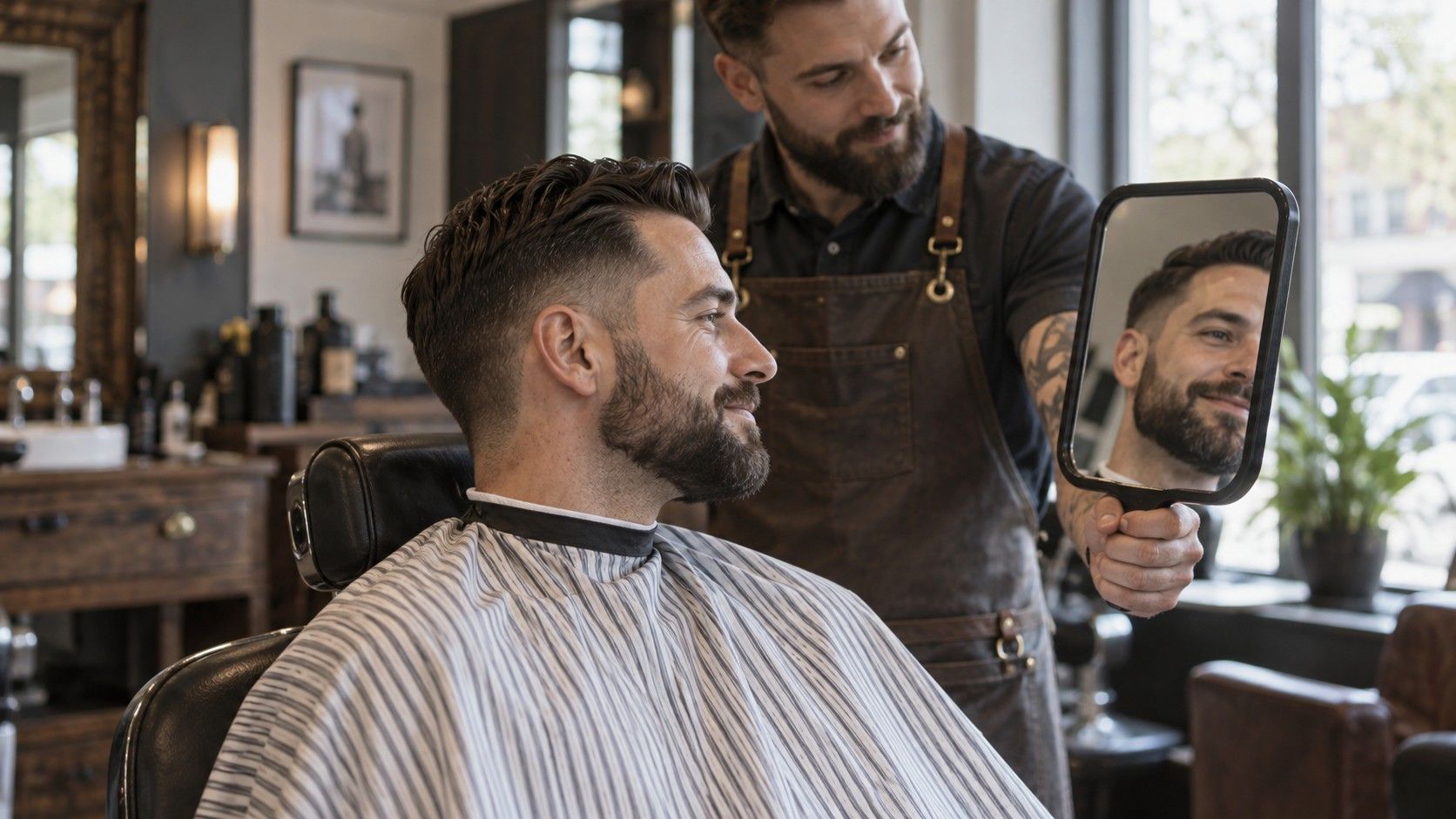
At a hair appointment, bring photographs of styles you like and a simple observation: “My face looks longer than wide, and I want to keep some width around the sides.” Explain your hair texture, how it dries and how much styling you will do. Those practical details give the stylist something to work with. A shape label alone cannot explain shrinkage, a cowlick or a morning routine.
Keep one clear photo and a short note about what you liked in the experiment. There is no need to build a collection of measurements or reassess your appearance every week. When you next wonder how to determine face shape, return to the same simple sequence: clear view, broad proportions, outline, then a choice you can actually test. The useful result is a better decision, even if your label stays approximate.