Looking for haircuts for long faces can produce a surprisingly narrow set of instructions: add bangs, avoid length, flatten the crown. Those suggestions describe possible visual effects, not obligations. Start with the part of your current hairstyle you want to change, then choose where you want volume, how much forehead you like showing and how much work the cut can demand.
Check whether length or styling is the concern
Look at your face with the hair held back, then let it fall as you normally wear it. If the longer impression appears mainly with a tall crown or narrow sections at the sides, styling may be the thing you want to adjust. A new haircut is one option, but a different finish or part can provide useful information before you remove length.
Take a front and side photograph at the same distance, using a relaxed expression. Notice the space above the forehead, the hair around the cheeks and the point where the ends finish. Avoid judging from a close selfie taken from above. That view changes the proportions and tells you little about how the haircut looks across a table or in a mirror.
Try to turn “my face looks long” into a more specific request. You might dislike flat sides, want the eyes framed, or feel that the ends drag down the whole silhouette. Alternatively, you may enjoy a long, narrow outline and simply want more movement. A stylist can work with any of those aims more easily than a general request to fix your shape.
Keep the routine in the same conversation. A style that relies on a round brush every morning is a different commitment from one that settles after air-drying. Mention exercise, glasses, headwear and whether you tie the hair back for work. These details influence which changes remain useful after the first salon finish has washed out.
Compare fullness at the sides with height at the crown
Volume has a location. Fullness near the temples, cheeks or jaw creates a different outline from lift directly above the forehead. If you want less vertical emphasis, try reducing crown height and bringing a little movement toward the sides. This is an experiment in silhouette, not a rule that a long face must look shorter.
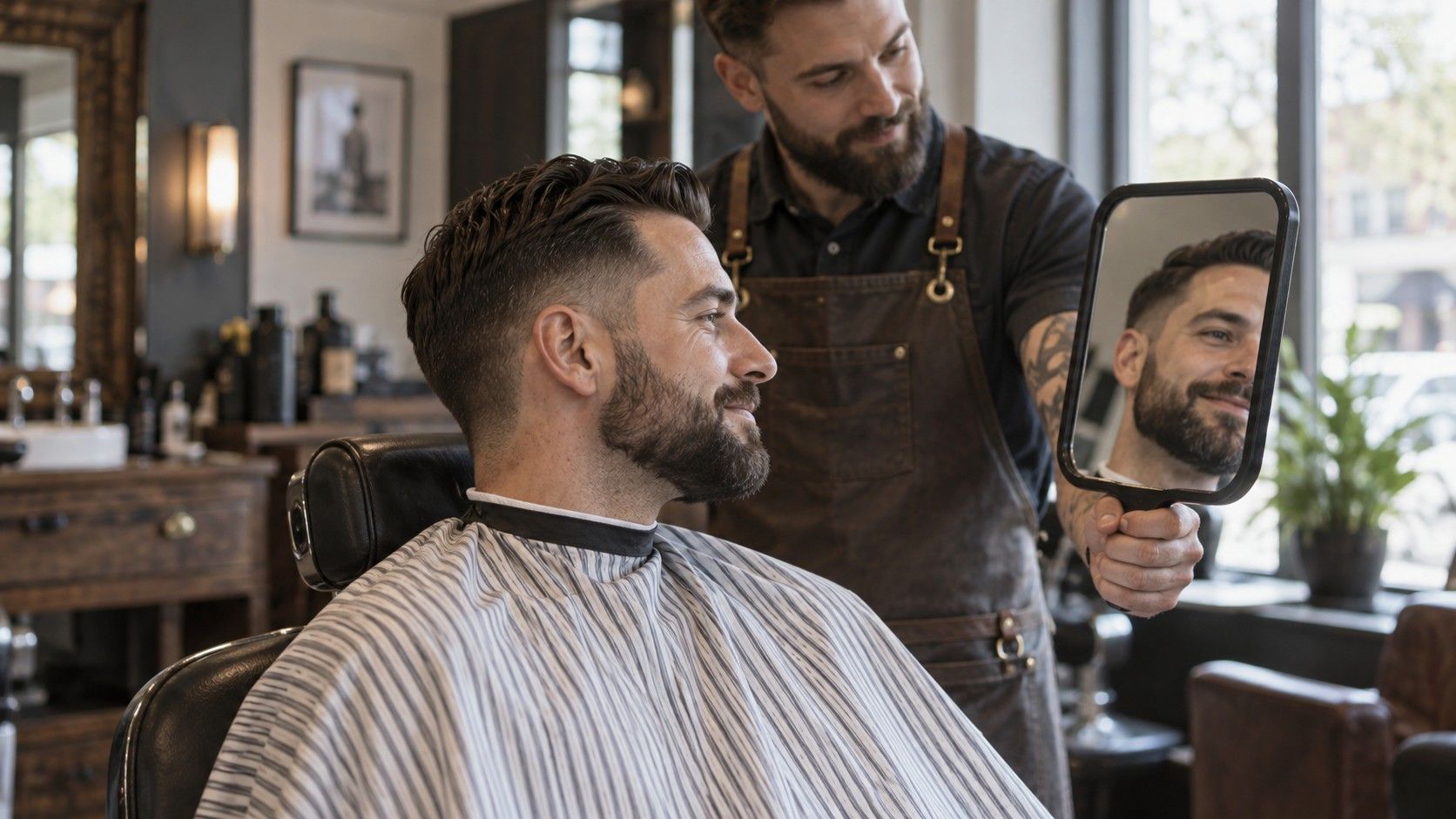
With a short cut, compare the relationship between the top and sides before choosing a length. Very close sides and a tall top can emphasise a narrow, vertical silhouette. Keeping some side coverage may give the impression you prefer, but it also changes how the hair grows out around the ears. Ask to see that area from the side rather than deciding from the front alone.
For a bob or medium cut, look at where the fullest part will sit when dry. Ends at the jaw, ends below it and ends brushing the collarbone draw different lines. The same named cut can look quite different with tucked ears, a central part or a sweeping front section. Bring a reference showing the detail you want rather than relying on the haircut name.
Test your current hair first with a modest change in styling. Dry the roots with less lift on top, or arrange a little more hair beside the cheeks. Check that result later in the day, when the freshly styled volume has settled. If maintaining the shape takes constant adjustment, a cut designed around your natural fall may be a better conversation.
Choose a fringe you can realistically maintain
A fringe can reduce the visible forehead area and introduce a horizontal or diagonal line near the eyes. It can also need more attention than the rest of the cut. Before choosing one from a photograph, check whether the front hairline lifts, splits or falls strongly to one side. A cowlick does not automatically rule out bangs, but it affects the available options.
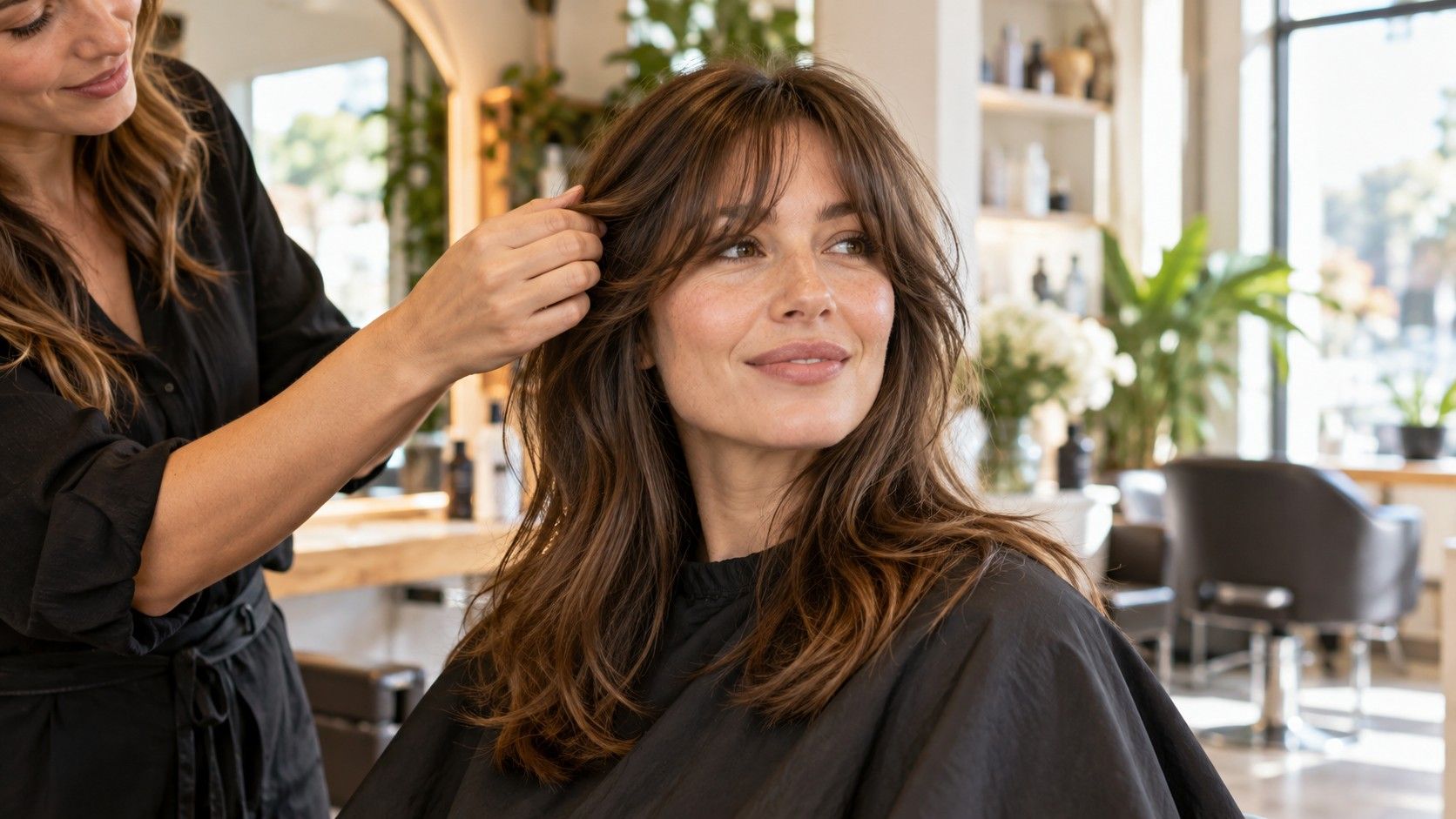
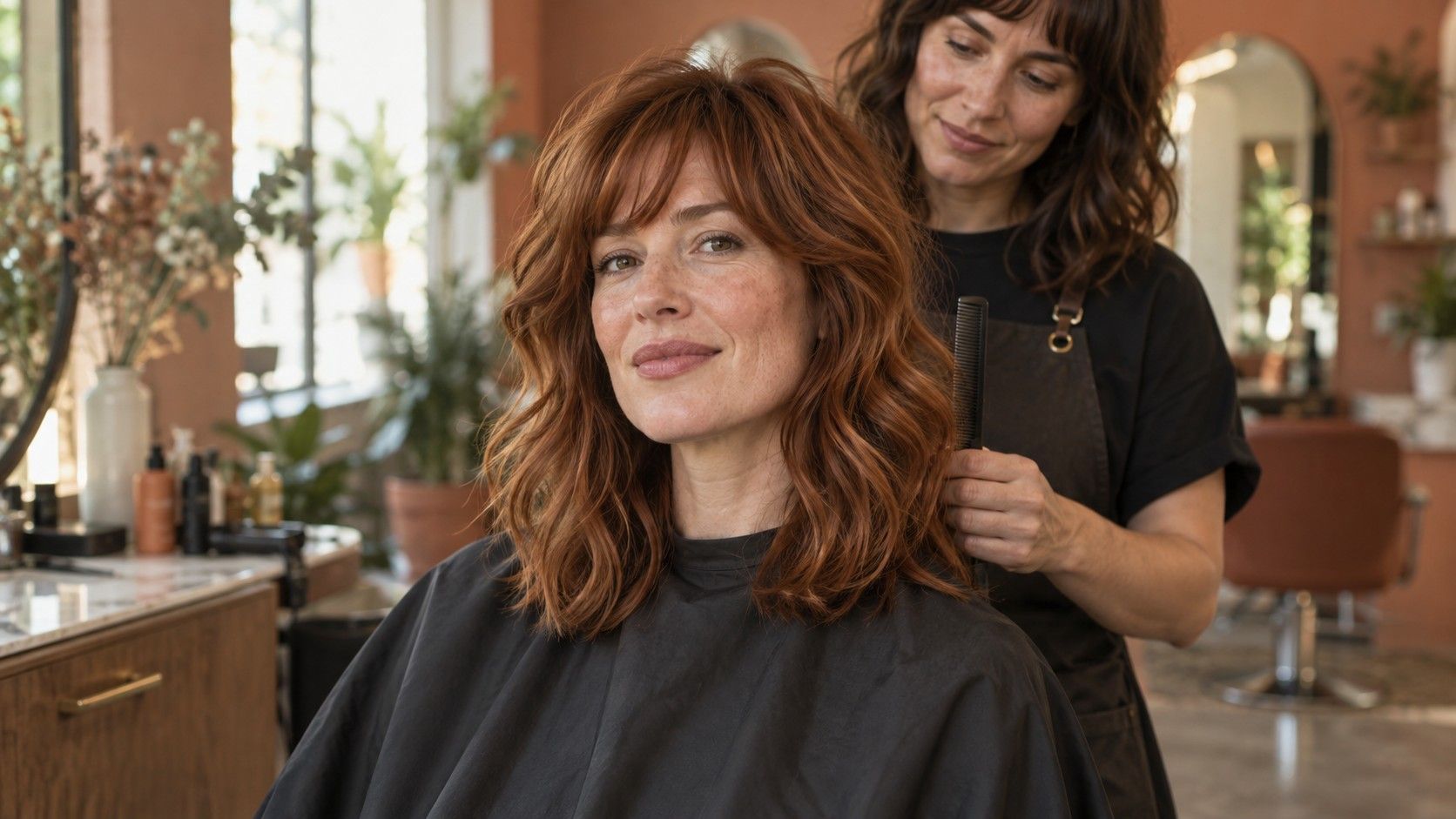
Curtain bangs leave a central opening and can blend into longer sides. A side-swept fringe creates an asymmetric line. A fuller straight fringe gives a more continuous edge, with less visible forehead underneath. Each can be worn on a long face; the meaningful choice is the line you like and the amount of styling you can sustain.
| Fringe idea | Effect to preview | Practical check |
|---|---|---|
| Curtain fringe | An opening at the centre with framing at the sides | Does your usual part stay open without repeated styling? |
| Side-swept fringe | A diagonal line across the forehead | Does it fall in that direction naturally? |
| Fuller straight fringe | A clearer horizontal edge above the eyes | Will you refresh and trim it when needed? |
If you wear glasses, try the proposed fringe with the frames on. Hair may catch on the upper rim or sit differently once the glasses are in place. Ask where the fringe will finish dry, how it can be pushed aside and what happens as it grows. There is no fixed trim interval for everyone; decide what amount of upkeep fits your schedule.
Keep long hair with useful layers and movement
Long hair is not excluded from oblong face hairstyles. If you like your length, keep it in the discussion and identify what feels too flat or heavy. Layers can create movement, but their placement matters more than their existence. Very short layers near the crown may produce lift precisely where you were hoping for less height.
Ask where the face-framing pieces will begin and what they will do when you tuck the hair behind your ears. Pieces near cheek or jaw level create a different frame from strands that start below the chin. If you routinely wear a ponytail, check whether those pieces will stay back or fall forward. A pleasing loose shape can become irritating during the rest of the day.
Weight at the ends deserves a look too. A solid perimeter can make fine hair feel more substantial, while removing too much can leave it looking sparse. Dense hair may need a different balance so the ends move without creating an unwanted bulky outline. Tell the stylist whether your concern is weight, lack of movement or the way the cut expands after washing.
Before committing, compare references with similar texture and density to yours. A picture of glossy heat-styled waves shows a finish as well as a haircut. Ask what the cut would look like after your ordinary wash and dry. If you enjoy occasional styling, plan for that version, but make sure you also like the lower-effort version you will wear most often.
Adapt the plan for curls and fine hair
Curly hair needs room for its dry shape. The length visible when wet or stretched may be quite different once the curl settles, and the amount of change varies between people and sections. Discuss the shortest pieces in their dry state. A fringe that seems safely long while damp can sit much higher than expected afterward.
Look at where your curls naturally gather volume. If they already fill the sides, you may not need a cut intended to add more there. If the top expands while the sides fall flat, describe that exact pattern. Arrive with photographs of your normal curl routine, including a less cooperative day, so the proposed outline reflects what your hair actually does.
Fine hair and low-density hair are not the same thing: strand thickness and the amount of hair are separate observations. Explain whether your hair collapses at the roots, separates at the front or looks thin at the ends. An aggressive layering plan can solve one issue while creating another. Ask which sections will keep their weight and which will be shortened.
Finish the appointment discussion with a realistic test: how should you dry it, which step matters most, and how can you wear it when that step is skipped? You do not need a complicated routine to justify a haircut. The right plan is one whose outline you like, whose maintenance you accept and whose behaviour makes sense for the hair you have.