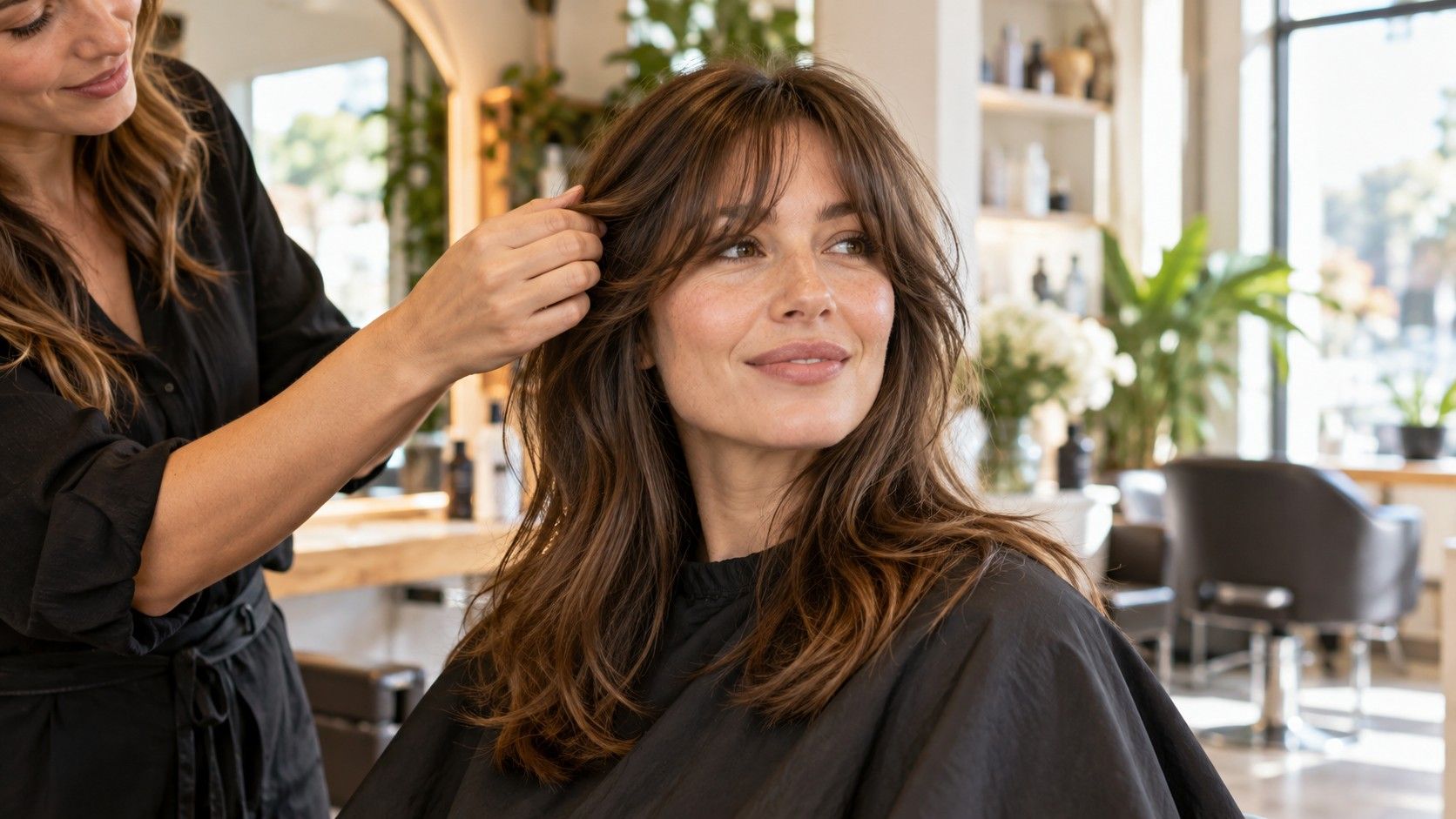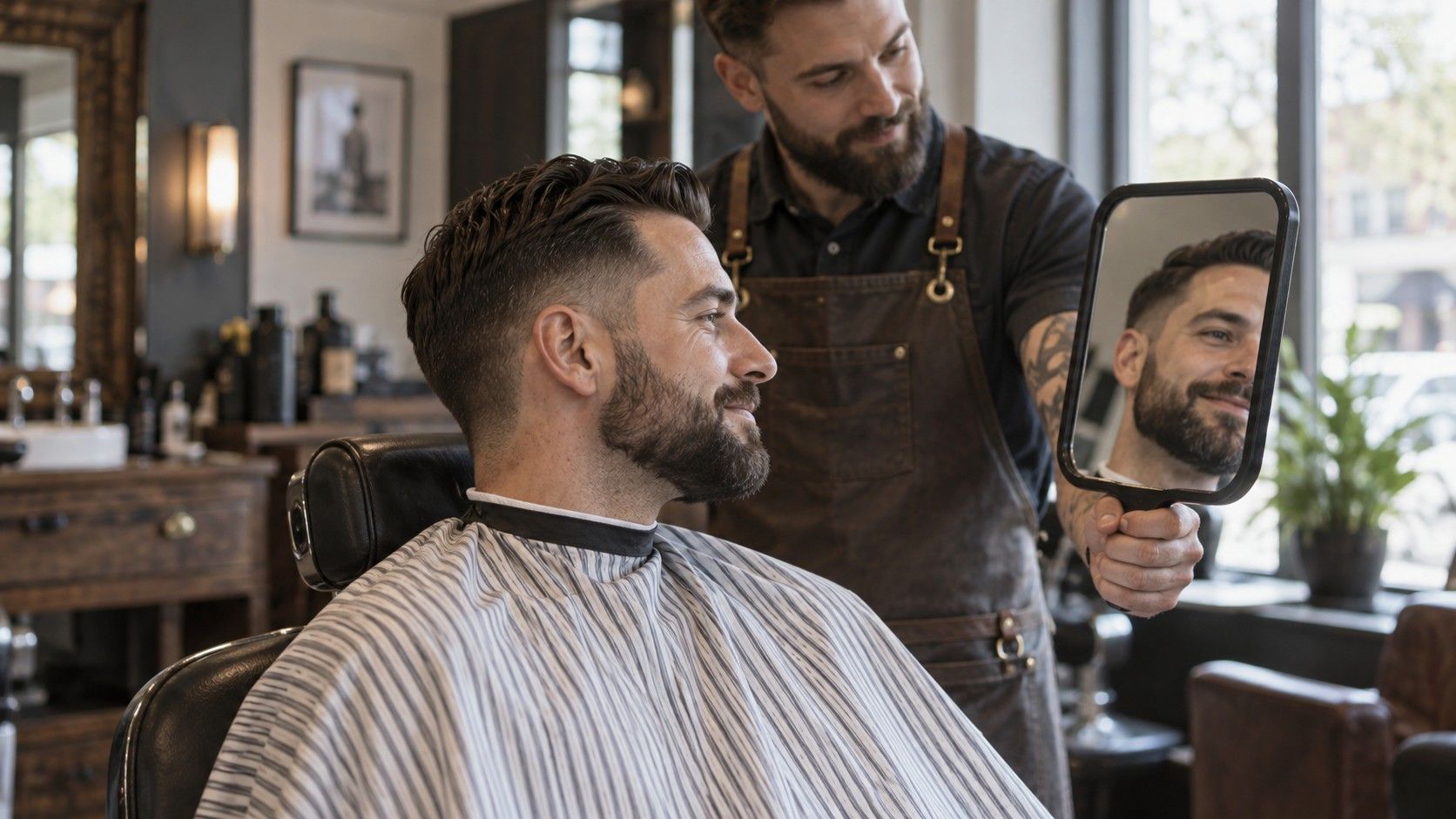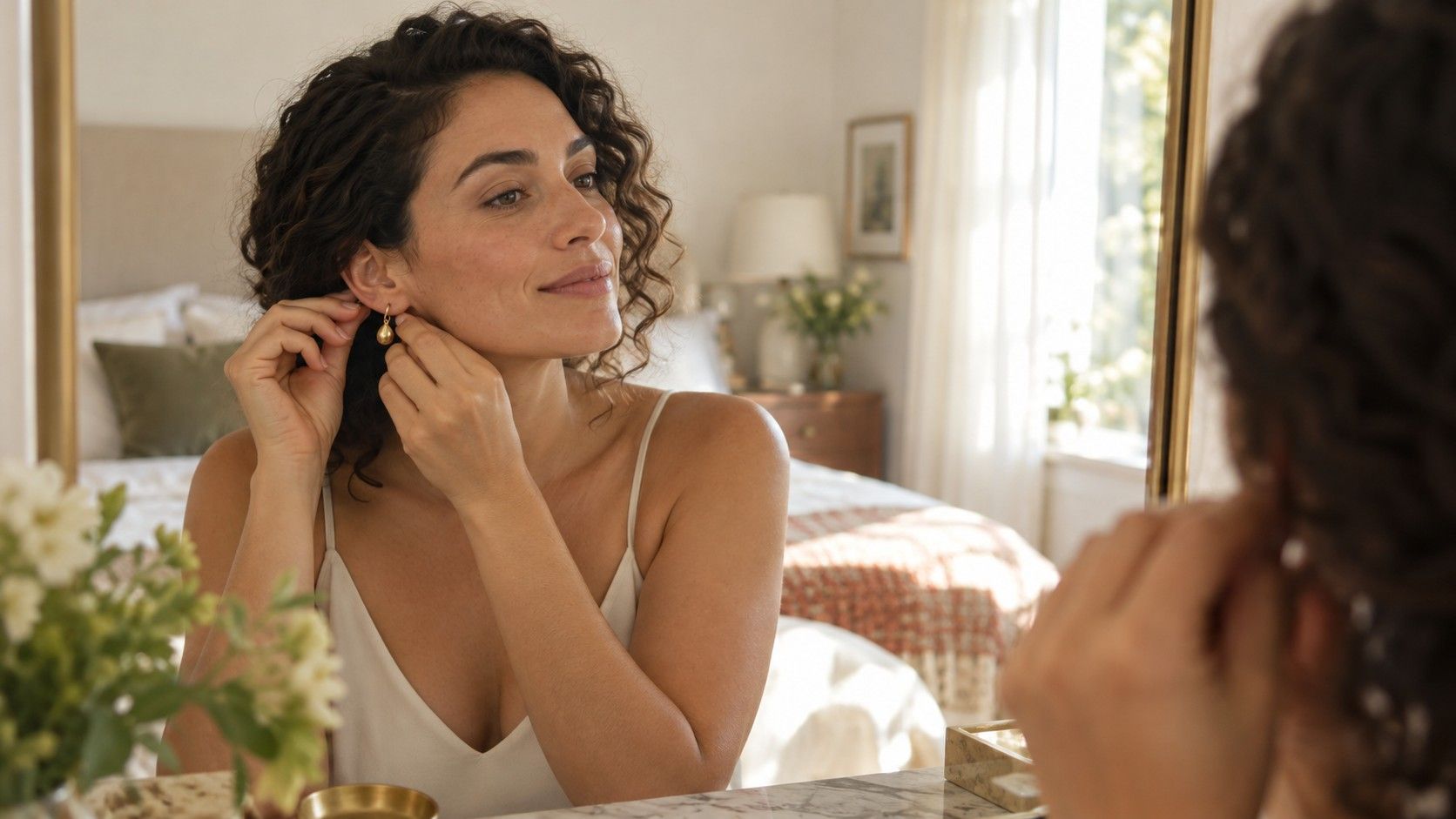
Oval and oblong are neighbouring descriptions, so a face can reasonably look like both. The practical difference is how strongly length shapes the overall outline and whether that changes what you want from your hair or glasses. Begin with a consistent view, separate the face from the hairstyle, and keep the decision in mind. A precise label is optional; a clear idea of the effect you enjoy is much more useful.
Compare face length with the side outline
Oval usually describes a face that is longer than it is wide, with a gently curved outline and some narrowing toward the jaw. Oblong emphasizes a stronger impression of length, sometimes with sides that appear more parallel. The descriptions overlap. You can have a long oval face shape with soft curves, and different charts may give that same outline different names.
Start with a level front view and move the hair away from the sides. Observe the distance from the visible hairline to the chin, then compare it with the widest part of the face. Look at how the temples, cheeks and jaw connect. Does the outline narrow gradually, or does it keep a similar width for much of its length? That second observation often tells you more than repeatedly measuring the chin.
Use the same boundaries each time. Measuring from the top of the hairstyle adds hair height to face length; measuring from the eyebrows leaves out much of the forehead. A receding or uneven hairline can make the upper boundary difficult to choose. In that case, describe what you can see rather than relying on a supposedly precise length-to-width ratio.
A close selfie can change the apparent proportions because the camera is near the middle of the face. Take another photo from farther away at eye level, without tilting the head up or down. Keep the expression neutral for the outline check, then smile for a second view. The first image helps you compare the silhouette; the second is useful when trying frames and face-framing hair.
Decide whether the distinction is useful
Before choosing between oblong and oval, name the decision you are trying to make. If you are considering a fringe because you would enjoy less visible forehead, that preference is already useful. If glasses keep looking too shallow, compare deeper lenses. Neither experiment requires a final verdict on your category. Face-shape vocabulary should make shopping or a consultation clearer, not hold the decision hostage.
For an oblong vs oval face comparison, ask whether length is the feature you consistently notice across ordinary photos. Then ask whether you want to change its visual emphasis. Some people enjoy an elongated outline and choose styles that echo it. Others prefer more width around the sides. Both are style preferences; a long face is not a flaw that needs balancing.
Look at two or three photographs taken under similar conditions rather than collecting dozens of conflicting selfies. If your face looks longer only when the hair is piled high or the camera is tilted, the styling and viewpoint deserve attention first. If the longer outline is consistent, keep that as a descriptive note. You can still use oval references when their hair texture or overall cut is closer to yours.
A useful note might read: “Long face, curved jaw, fairly narrow cheeks, prefer hair away from my eyes.” That gives a stylist several practical facts and a preference. “I am definitely oblong” gives less detail and may lead both of you toward a stock recommendation. Keep the label if it helps, but bring the description with it.
Consider fringe, layers and crown volume
A fringe covers part of the forehead, which can change the visible vertical space of the face. A straight fringe, curtain fringe and loose side section expose different amounts of skin. Before committing, place a front section loosely across the forehead or compare photographs with similar fringe shapes. Pay attention to the area around the eyes as well as the overall length impression.
The everyday questions are concrete. Will the fringe need heat styling after every wash? Does a cowlick lift one side? Will it sit against glasses or bother you when you exercise? A long face does not make those questions disappear. Ask how the proposed cut will behave with your natural texture, and whether a longer starting length would give you room to adjust.
Layers can place volume at different heights. Fullness beside the cheeks may create a wider impression, while lift at the crown can emphasize vertical direction. That does not mean crown volume is forbidden. Compare a flatter top and a little lift in the mirror while leaving the sides unchanged. You may prefer the energy of the taller version even when it makes the outline look longer.
Length alone is a weak haircut rule. A bob can be narrow and close to the head, or broad and textured; long hair can sit in straight vertical lines or spread through waves. Notice where the silhouette is fullest and where the ends land. The same nominal length can look quite different after air-drying, so bring a reference that resembles your hair density and texture.
Try glasses without relying on a shape chart
Frames add a horizontal feature to the face, but their effect depends on their actual width, depth, colour and position. Start with a comfortable bridge and suitable temple width. The frame should remain stable without excessive pressure. An optician can assess fit and lens requirements, which may narrow the options more usefully than a chart naming oval faces as suitable for everything.
When comparing shapes, try two frames with a similar width but different lens depth. A deeper lens occupies more vertical space; a shallow rectangle leaves more skin visible above and below. Check whether the lower edge touches the cheeks when you smile and whether the upper edge feels too close to the eyebrows. A front photograph can help, but comfort needs an in-person check.
Then compare colour and rim weight without changing every other feature at once. A dark, substantial upper rim can create a stronger horizontal line than a fine metal frame of similar dimensions. You might enjoy that definition, or prefer the lighter option. The goal is to identify what you respond to, not to accumulate evidence that one frame is objectively correct for an oblong outline.
Try the glasses with your normal hairstyle and at a realistic distance from the mirror. Pulling all the hair back for the face-shape check is useful, but it may not represent how you wear the frames. If you switch often between loose hair and a bun, test both. Fit, clear vision and a style you want to wear are better final criteria than a label.
Bring practical examples to a salon consultation
Choose a small set of references that show a specific feature you want to discuss: a fringe length, volume near the cheeks or the way layers tuck behind the ears. Include a photograph of your own hair on an ordinary day. A polished reference image can hide extensions, substantial styling or a texture unlike yours, so ask which part of the effect the cut itself can deliver.
Describe your routine in plain terms. Say whether you air-dry, use a round brush, wear a helmet or need to tie everything back. Mention the time you are willing to spend on styling and how often you want trims. Those details can change the recommendation more than the boundary between oval and oblong, especially for a fringe or short layers.
Ask the stylist to indicate where the shortest front piece and the fullest part of the finished shape will sit. Seeing those points beside your actual face is more useful than agreeing to “soft layers” without a shared picture. For curls, clarify whether the demonstrated length refers to wet, stretched or naturally dry hair. For a fringe, agree how much can be removed at the first appointment.
You can finish the comparison without choosing a permanent identity. Perhaps your face is broadly oval and distinctly long, and your preferred cut keeps that length visible. Perhaps you want a fringe and wider side volume. Record the result you enjoy and what it takes to maintain it. That information remains useful after the shape chart has been put away.