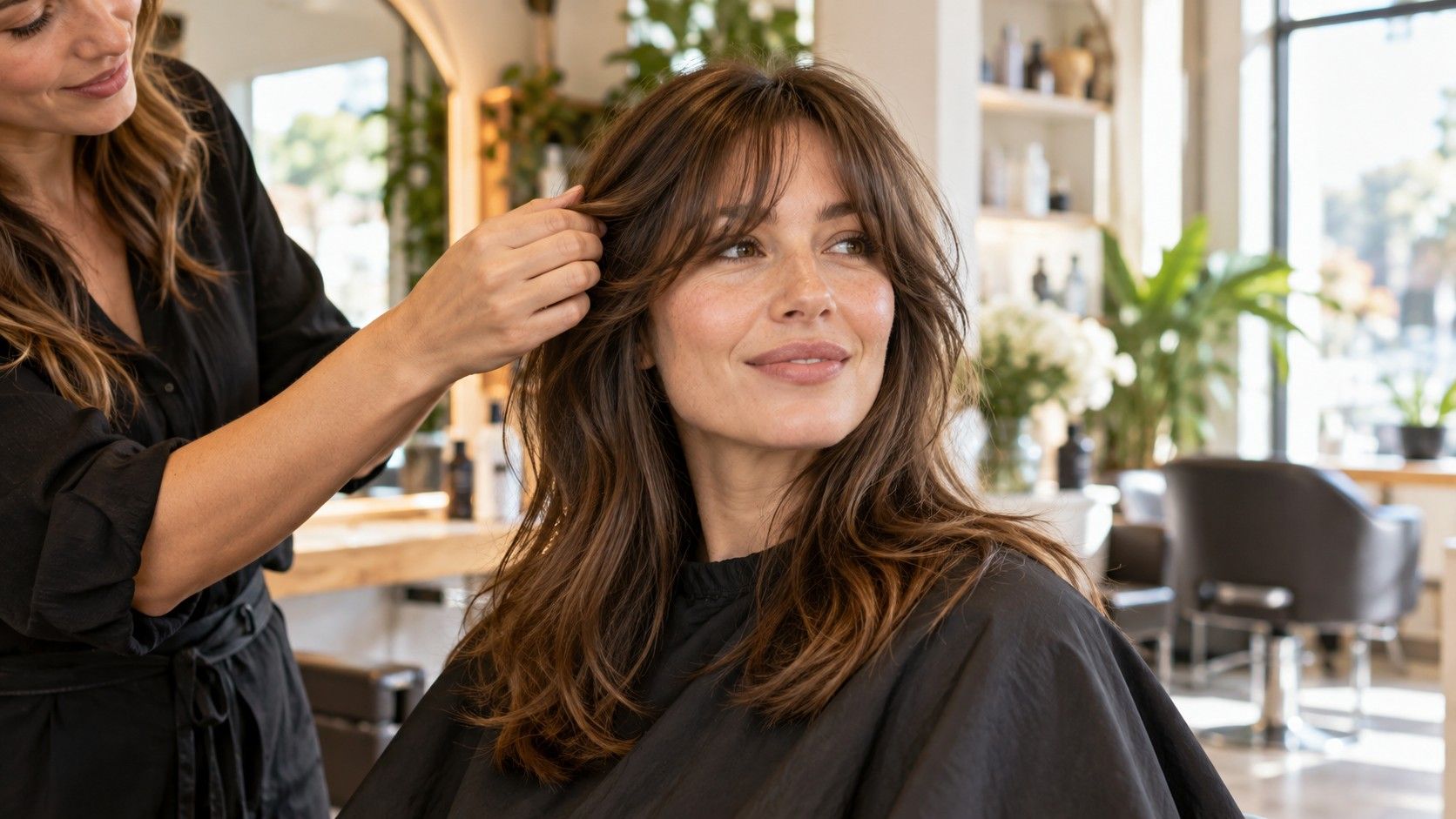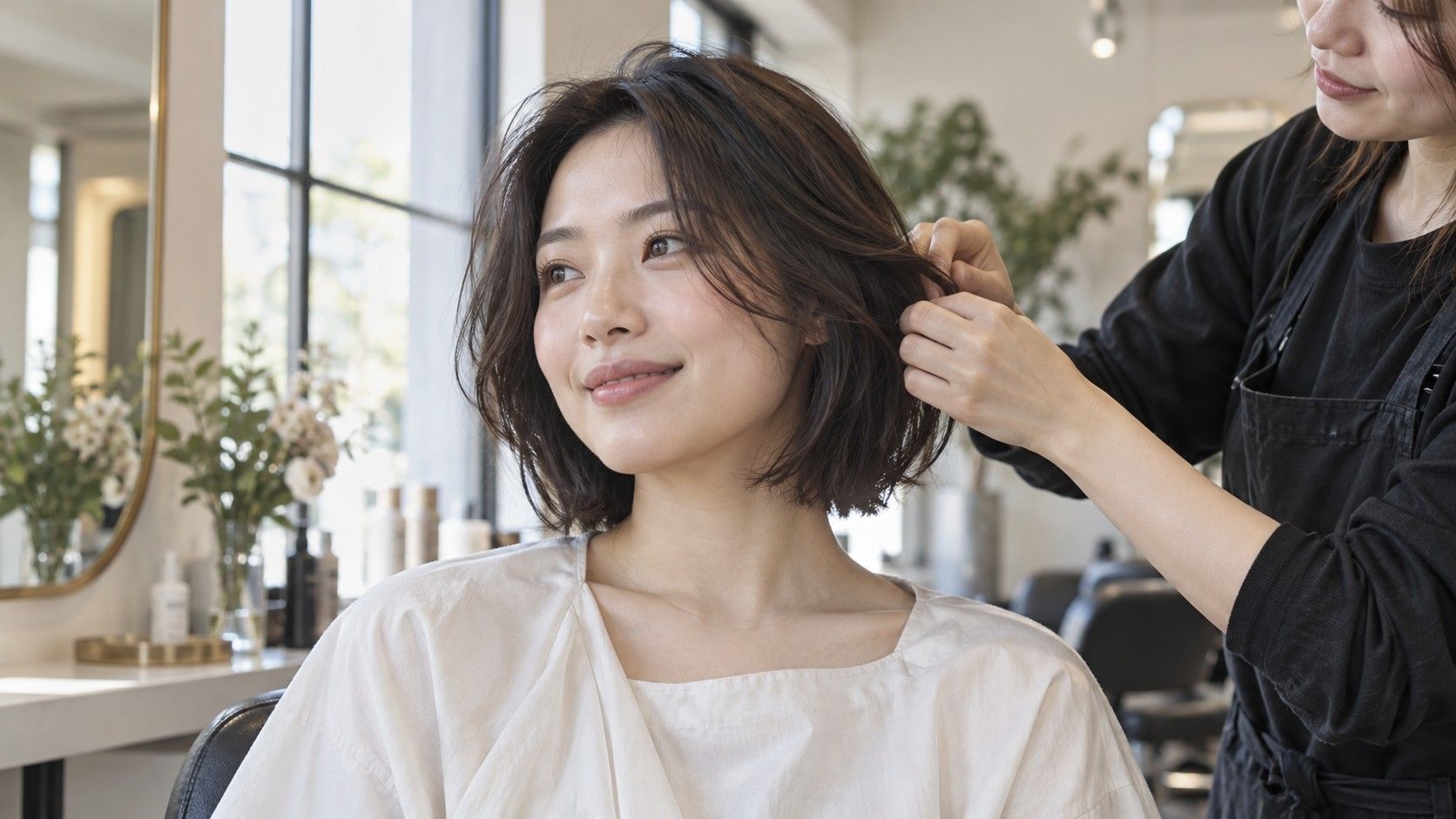
A round face can look good with a close crop, a sharp bob or hair well past the shoulders. The useful question is what you want the haircut to do: show your cheeks, give the outline more height, add movement or make mornings easier. Start with that preference, then check how your texture, density and growth patterns will support the shape after the salon styling has washed out.
Choose the effect you want before the length
Look at your current hair from the front with it both loose and tucked behind the ears. Notice whether you enjoy an open cheek area or prefer a few pieces falling beside it. A round face usually describes a comparatively compact outline with curved sides, but that description does not tell you which effect to prefer. You might like the rounded outline and want a haircut that repeats it.
If you want the hair to create a longer-looking outline, compare some height at the crown with less fullness at the sides. If you want width and a playful curved silhouette, try the opposite. These are visual options, not corrections. A style with volume beside the cheeks is not automatically a mistake; it can be exactly the shape someone wants.
Use photographs to name the feature you like. “The ends look solid”, “the cheekbones are visible” or “there is movement around the collar” is more useful than saving a picture solely because the person has a round face. Look for a similar starting texture and density as well. A polished blowout can make a heavily layered cut look fuller and smoother than it will when left to air-dry.
Test a parting or tuck before committing to a cut. Move the part slightly to one side, pin the front pieces back, then release them. Keep the mirror angle the same. This will not reproduce a new haircut, but it can show whether you actually like the forehead more exposed or the cheek area more covered. That preference gives the stylist a concrete starting point.
Place layers where they work with your texture
Layers change how weight is distributed through the hair. Shorter sections may create movement or lift, while a more solid perimeter keeps visual weight at the ends. The result depends on texture and density. On fine, sparse ends, extensive layering can leave the outline looking thinner. On dense hair, carefully placed layers may help a cut move without leaving a heavy shelf around the sides.
For waves and curls, talk about the dry shape as well as the cut length. A face-framing section can spring higher than expected, and different areas may shrink by different amounts. Ask the stylist where the shortest pieces will sit when your hair is dry in its usual pattern. Bring a photograph of an ordinary wash day if the hair is temporarily straightened for the appointment.
Watch where the widest part of the haircut sits. Layers ending around the cheek can encourage fullness there; longer sections may place movement lower down. Styling and curl pattern can change this substantially, so treat it as something to discuss and test. The location of volume matters more than a rule that all haircuts for round faces need long layers.
Be clear about what you need to tie back. A face-framing layer that looks good loose may fall out of a ponytail during work or exercise. Ask to see the proposed shortest length beside your face before it is cut. If keeping every section secure matters, a longer front or a less layered shape may be a better fit for your routine.
Compare bob, shoulder length and longer cuts
A bob offers a defined outline and can make the haircut itself the main feature. Decide whether you want the ends near the jaw, below the chin or farther toward the shoulders. A straight, solid edge and a softer textured edge create different impressions at the same length. Neither is reserved for a particular face shape. Ask how the proposed edge will behave with your natural bend.
Shoulder-length hair gives room for movement and often allows a tie-back, depending on the shortest layers. Check where the ends meet the shoulders and collar: that contact may encourage them to flick out. If you dislike that effect, discuss whether a slightly different length or a styling adjustment would help. A photograph taken with the hair pushed forward may conceal how it sits behind the shoulders.
Longer hair can offer a continuous outline beside the face and more options for tying it up. It can also take longer to wash, dry and detangle. Keeping length does not mean you need many layers; a stronger perimeter may be preferable if the ends already lack density. Consider the entire shape from the back as well as the front pieces.
| Length to consider | Useful question | Practical check |
|---|---|---|
| Bob | Where should the edge draw attention? | Check natural waves and the nape hairline |
| Shoulder length | Will the ends sit on the collar? | Test tie-back needs and likely outward bends |
| Longer cut | How much movement do you want? | Check end density and drying time |
| Short crop | How open should the sides feel? | Discuss crown growth and trim frequency |
A short crop deserves a place in the comparison. It can expose the face fully, leave a longer top or keep softness at the temples. Check crown whorls, the nape and the direction the front grows. A crop chosen around those patterns can be easier to live with than a longer style that needs constant persuasion to sit differently.
Try a fringe without hiding your whole face
A fringe changes the visible forehead and the way the front sections frame the cheeks. A full, curved fringe, a lighter broken edge and a longer side-swept section are different choices. Start by deciding how much forehead you want to see, rather than assuming a round face needs an open forehead. If a full fringe appeals to you, ask how its depth and edges would work with your density.
Curtain-style pieces can open at the centre and fall toward the sides, but they are not automatically effortless. A strong growth pattern may split them unevenly or push them away from the forehead. Ask whether you would need to wet and dry the roots each morning. If you usually leave home with air-dried hair, that requirement matters more than the name of the fringe.
Before cutting, check how the proposed fringe works with glasses. The ends may catch on the top rim, sit over the brows or move away from the face when the frames go on. Wear your usual pair to the appointment. Also mention whether you habitually push hair behind the ears; a front section that is too short to tuck can become irritating even when you like its shape.
You can make a cautious first change by keeping the front longer and adjusting it later, if the stylist thinks that suits the cut. Clips or a temporary tuck can help you judge how much face coverage you enjoy, though they cannot predict the exact finished fringe. Take the final length decision while considering the dry texture, not just the neat line of wet hair.
Explain upkeep and styling time to your stylist
Describe a normal morning precisely: you air-dry, use a diffuser, make one quick pass with a brush or regularly style with heated tools. Say how often you want to book a trim and whether you will maintain a fringe between larger appointments. “Low maintenance” means different things to different people; an explanation of your routine gives it a practical meaning.
Ask to see the finished cut with the amount of styling you expect to do. A full salon blowout can be enjoyable, but it may hide how a new layer falls in the natural texture. Request a demonstration of the one or two steps needed to reproduce the shape, including where to direct the air or place a small amount of product. Check that the routine fits the time you actually have.
At home, judge the haircut across a few normal washes and different ways of wearing it. Note whether the front falls into your eyes, the ends turn in an unexpected direction or the sides feel too full for your preference. These specific observations help at the next appointment. Saying “round face hairstyles do not suit me” gives much less information about what needs adjusting.
Keep the photograph that showed the effect you wanted, alongside a picture of your own hair on an ordinary day. You may decide to change the fringe, move the layers lower or keep the same length with a different edge. There is no obligation to make the face look narrower. A useful haircut supports the outline you enjoy and behaves in a way you are willing to maintain.