A square face description usually points to a broad jaw, visible corners and relatively straight sides. Those features can be shown clearly or framed with more movement; either choice can look intentional. When comparing haircuts, decide what you want to see around the jaw and how much styling you will do. Length, texture and the place where the ends sit make that conversation more useful than a list of forbidden cuts.
Decide whether to show or soften the jaw
Start with your hair held away from the face, then let the front sections fall naturally. Look at what changes around the jaw corners. Do you prefer the jaw visible, or do you enjoy movement passing across it? “Soften” is a description of an effect created by the hair. It does not mean the face has a feature that needs fixing.
If you like a clear jawline, consider shapes that leave it visible: a tucked bob, a crop, or longer hair worn behind the ears. A strong perimeter can repeat the angular feeling of the face. If you prefer a less defined border around the jaw, try curved movement or face-framing sections. Hair texture influences how much movement a cut can create without daily styling.
Collect photographs for a specific reason. One might show the nape you like, another the length beside the chin, and another the fringe. Say which details matter rather than asking for the whole photograph to be copied. A reference with similar density and natural texture is especially useful, because styling can conceal the way a cut was built.
Place the ends of a bob intentionally
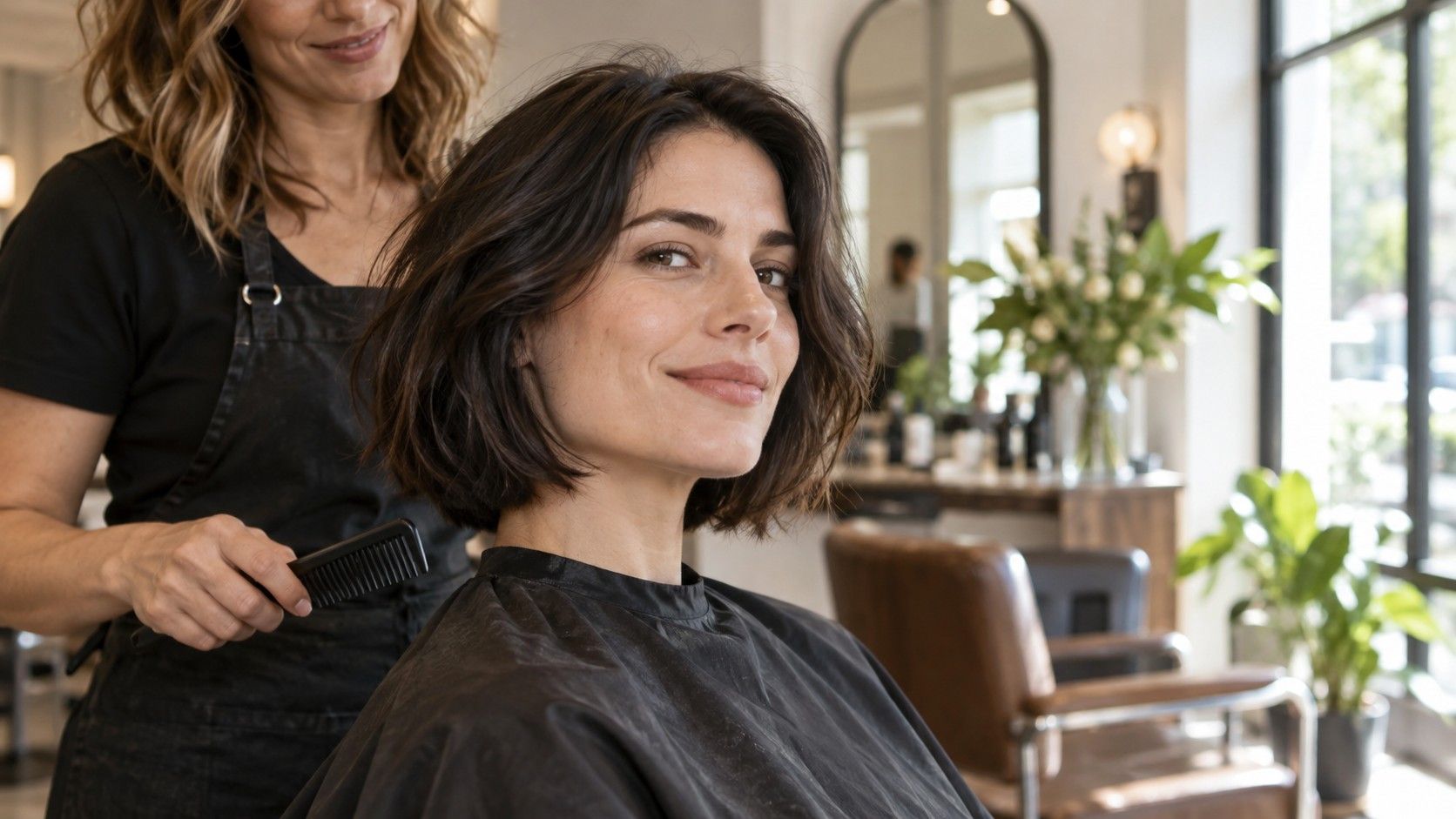
A bob ending near the jaw places a visible line close to the feature you are considering. That can be a deliberate, graphic choice. Moving the edge below the chin changes where the eye follows the hair, while a shorter bob may expose the jaw more completely. There is no universal safe length. What matters is where the edge sits on your face and what effect you prefer.
Compare the edge as well as the length. A solid blunt line can feel structured, while a less solid or gently curved finish may read as softer. Those descriptions do not require heavy thinning. On hair with low density at the ends, preserving a stronger perimeter may give a more convincing outline than removing weight to chase a soft look.
Your natural wave can move the ends away from the position shown while wet. Ask where the bob is likely to sit once dry, and whether it needs a brush or a heated tool to stay tucked under. At the back, discuss the nape hairline and any growth pattern that pushes the hair outward. A short edge can reveal those patterns more than a longer cut.
| Bob detail | Possible visual effect | Check before cutting |
|---|---|---|
| Edge close to jaw | Draws a line beside the jaw | Whether you enjoy that emphasis |
| Edge below chin | Places the perimeter lower | Dry length and natural bends |
| Solid perimeter | Gives the cut a clear outline | Density at the ends |
| More movement at the front | Breaks up a fixed border | Styling needs and ability to tuck |
Try the proposed length with your collar and glasses in mind. Hair touching a high collar may turn out, and pieces beside the frames may sit differently once you put them on. These details are easy to miss in a reference picture. Bring the frames you wear most and describe the clothing or work equipment that regularly meets the haircut.
Use layers without losing needed density
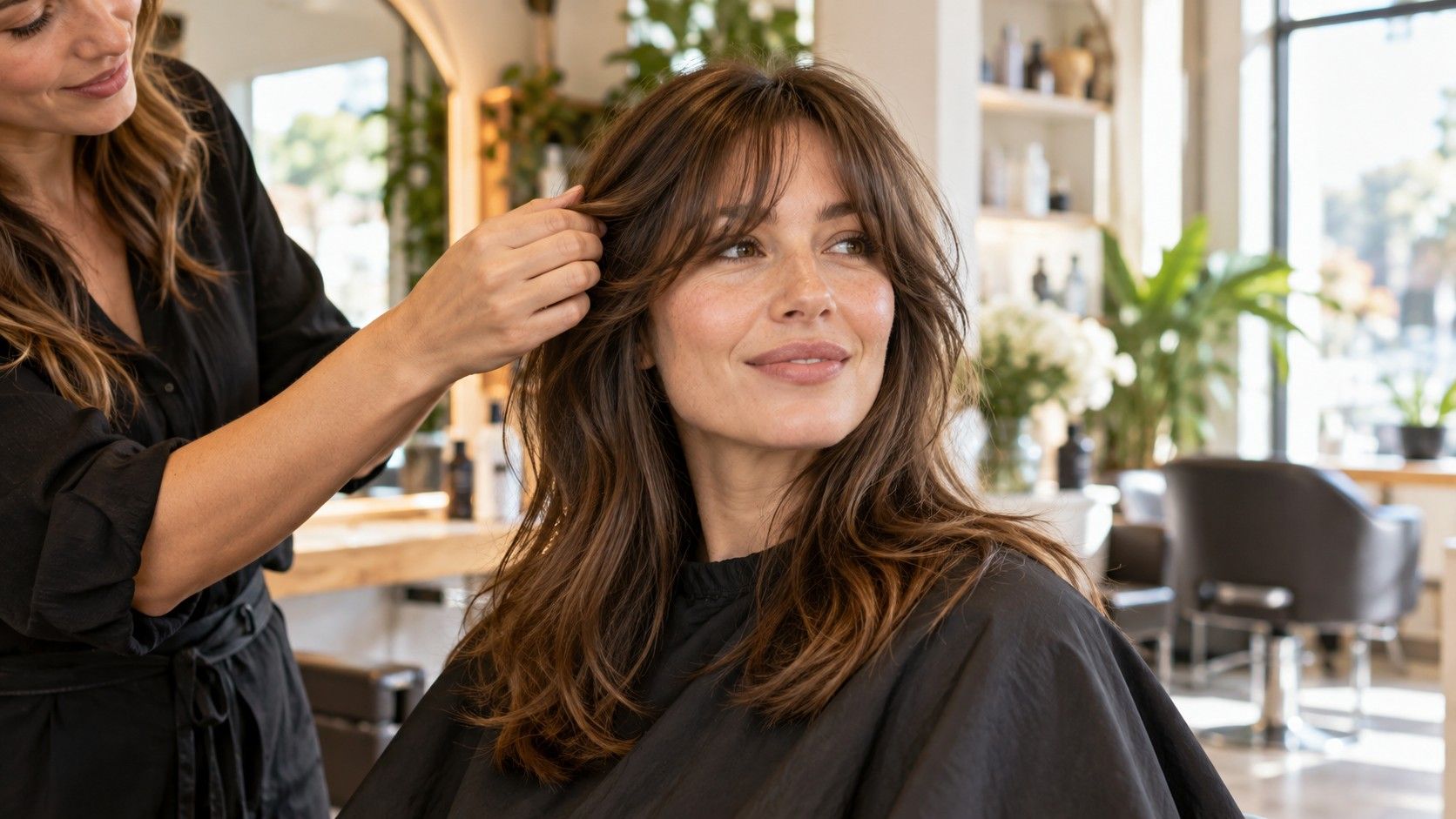
Layers can create movement around a square face, but “more layers” is not a complete haircut request. Ask where the shortest section will begin and where the weight will remain. Long face-framing pieces create a different result from short layers through the crown. You may want movement beside the jaw while keeping the rest of the perimeter quite solid.
For fine hair, identify where the ends already look sparse before agreeing to substantial weight removal. A stylist may suggest a smaller adjustment that lets the front move while protecting the overall outline. Dense hair raises a different question: where does it feel bulky, and does that bulk help the shape or make it difficult to manage? Describe the actual area rather than requesting thinning everywhere.
With waves or curls, judge the shape dry in the pattern you normally wear. A shorter section may spring up beside the cheek rather than settle at the jaw. Mention whether you alternate between natural curls and straight styling, since the visible lengths can differ. Ask which finish the cut is being designed around and what compromise to expect when you switch.
Think about movement during the day. If you need a ponytail or bun, show how high you usually wear it and explain whether loose front pieces are acceptable. A layer cut to frame the jaw may escape a tie-back. The same piece can be attractive when loose and inconvenient under a headset or during exercise, so make that trade-off explicit.
When comparing square face hairstyles online, separate the cut from the finish. Waves added with a tool can give a nearly one-length cut plenty of visible movement. Straightening can make a layered cut appear flatter and sharper. Ask what would remain if you skipped that styling step. The answer helps you choose a shape that still makes sense on an ordinary day.
Choose a fringe for your hairline and texture
A fringe changes the visible forehead and the lines around the upper face. It can be full and straight, light and broken, curved at the sides or swept across. A square jaw does not rule out any of those choices. Decide whether you want the fringe to repeat a strong line or bring a different kind of movement to the haircut.
Check the front hairline before choosing the shape. A cowlick may lift a short section or open a gap in the middle. Show the stylist where your hair naturally parts and whether you usually dry it into place. A fringe that depends on redirecting the roots each morning can be a reasonable choice if you enjoy that routine; it becomes less useful if you expected it to settle by itself.
Curly or wavy fringes need a discussion about their dry length and how the pattern varies across the forehead. Ask to keep enough room for the curl to sit comfortably out of your eyes. Do not assume a wet, stretched section shows where it will finish. If you wear the hair in several textures, decide which one the fringe needs to support most often.
For glasses wearers, check the relationship between the fringe edge and the upper rim. Moving the frames can lift the hair or alter the parting. Also say whether you touch or tuck the front repeatedly when working. A longer side section that can go behind the ear may suit you better than a short piece that needs frequent resetting.
Ask how the fringe will grow out and where it will blend into the sides. A shape that looks balanced on the day may need a separate trim before the rest of the cut needs attention. If you want fewer appointments, discuss a longer starting point or a front section that becomes face-framing hair as it grows.
Make a short cut work between appointments
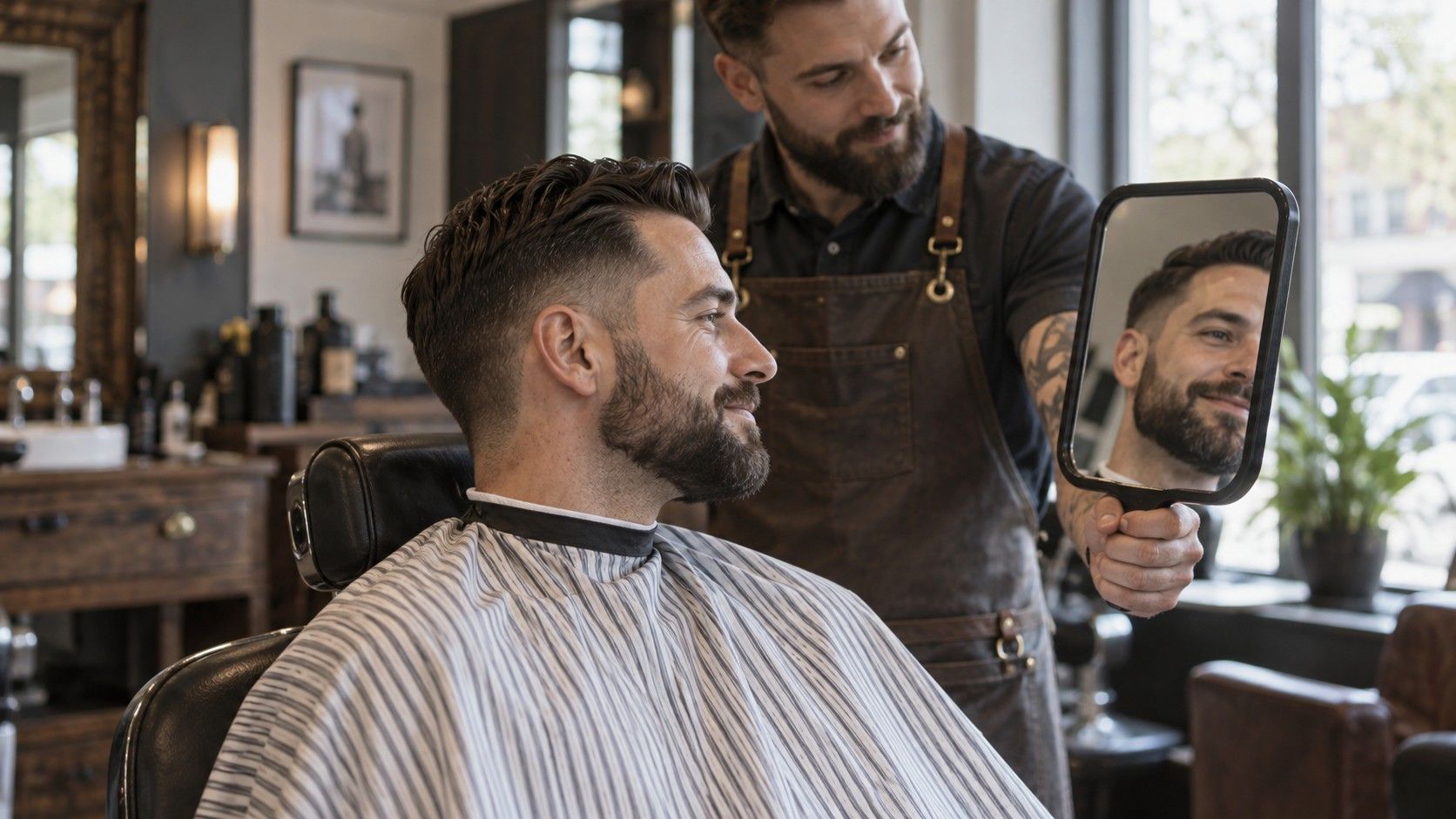
A crop or pixie can show a square jaw clearly while leaving softness or texture around the temples. Decide how close you want the sides and nape, and how much length you want on top. The crown whorl, hairline and density affect the daily result. Ask the stylist to check those patterns before settling on a very short outline.
Look beyond the fresh cut. A closely shaped nape or tightly fitted side section can change noticeably as it grows. Ask what will happen first: the fringe reaching the eyes, weight returning above the ears or the back losing its outline. Knowing that helps you choose a trim interval you are willing to keep, rather than accepting a schedule only after the cut.
Be precise about styling. Explain whether you want to run your fingers through damp hair, use a small brush or style the top with a dryer. Ask for a demonstration using the amount of product you would apply at home. A highly separated finish in a photograph may need more daily work than a softer, less sculpted version of the same cut.
After a few washes, record one useful observation instead of deciding that the entire face-shape category was wrong. Perhaps the sides feel too heavy, the front needs a little more length or the back dries better than expected. These details give the next appointment direction. Haircuts for square faces work best as a starting conversation, with the final shape guided by your hair and the look you enjoy.